Saturday, February 23, 2013

Can Robots Die?


“When a robot dies, you don’t have to write a letter to its mother” – this is the silver lining of losing a robot soldier according to a military chief. I think many would agree with this sentiment. One of the biggest upsides of war robots is that they aren’t human. This means that when they “die”, nobody grieves. But it also means a lot more than that. These robotic fighters also lack many of the limitations human soldiers contend with. As outlined in Singer’s book, some land robots can maintain a 4-minute mile pace for hours, they can travel underwater, “see” through smog and take several rounds un-phased. They also have perfect accuracy; SWORDS do not miss its target. Additionally, drones can fly for 24-hour stints and collect an incredible amount of data all without risking human life. These machines also lack human emotion. They act as “rescuers that are unaffected by the carnage, dust and smoke that envelop the remains…they are immune to the fatigue and heartbreak that hangs in the air”. Immune to pain, fatigue and emotion with incredible speed and strength, robots seem to be the logical if not inevitable next step in warfare. However, all of the previously described attributes, while exciting on the one hand, are equally terrifying. Consider I, Robot, the book from which the robotics company took its name. It is a cautionary tale of what can go wrong if and when robots begin to act of their own accord and violate the 3 laws, the primary law being that robots cannot harm a human. No such laws exist in our world and yet we are hurtling toward a future filled with robotics. I’m not suggesting that your Roomba is about to turn on you, but to say that robots which are ‘wired for war’ might harm humans is not a prediction but a fact. In addition to killing enemy soldiers, robots such as the CRAM have accidentally fired on U.S. troops. Of course, it could be argued that friendly fire is less likely with robots than with humans. Nonetheless, we are heading down a slippery slope. As Singer argues in the author’s note, war is inherently emotional. It is a major component of the human experience and the inspiration for masterful works of art and literature. So what happens when we remove the human element from a historically human experience? As Singer explains, the rate at which robots are entering the battlefield is increasing rapidly. From having zero robots/drones at the beginning of the Iraq war we have gone to thousands. How many is too many and what ramifications will this gigantic shift in the way we do war have on the world?


Changing the War, and the Soldier

        While reading Wired For War, it is evident that the way we fight wars is changing due to the robotics movement. However, what struck me most was one quote from early in the reading by Napoleon; "There are but two powers in the world, the sword and the mind. In the long run, the sword is always beaten by the mind"(31). While Singer states that the SWORDS fighting machine may prove this statement false, I think I'm going to have to agree with Napoleon. After all, it was minds that invented these machines in the first place.


(Fun Fact- Napoleon wasn't that short. It's all a myth stemming from the French measuring system back then being different from ours.)

        With so many machines taking the places of soldiers on the battlefields, it seems more logical in many cases to simply make the super-powered, yet not very intelligent, machines. And this, I believe, is Singer's thought in this small section.  But in my opinion these dumb super-machines are valuable because: why do we need them to have a mind if we still have ours?
        If we look at society nowadays the increase in gaming is obvious. These military machines are imitating this trend.  Singer mentions, "At the time of my visit, Foster-Miller was exploring replacing the controller with a Nintendo Game Boy-style controller, hooked up to virtual reality goggles.  War is becoming increasingly like gaming, and likewise games like Modern Warfare and Call of Duty show how games are becoming more like war.  I have even heard that soldiers use such games to prepare for war.
        Although we can shrink them, we can't replace our military with an army of drones, because we will always need real people there when these robots fail. Additionally, we don't yet know how these robots will fare when they eventually have to fight against similar robots.  My thought, however, is that the military personnel will be what's really changing. We will see a new demand in our armies and navies for people that can fix and program these robots to adapt them to battles, and for talented former-gamers that can adeptly control these machines.  Singer mentions that soldiers, used to playing with remote controlled cars in their childhood, quickly learned how to control these robots.  These are the kinds of people we will need in our armies of the future, essentially, gamers.  They will be the ones with the experience, talent, and intelligence needed to use the weapons of the future.  So, as Napoleon thought, it will be the mind that wins out. It will just be our minds. Basically, rise of the the nerds.

Thursday, February 21, 2013

We Are the Weakest Link


The catchphrase from the picture above is forever ingrained into my childhood memory. Taken from an antiquated game show, the weakest contestant is ultimately eliminated, and the show continues on. With the advancement of technology, new robots seem to be becoming threateningly prevalent in how war is waged. If history is any indicator of technology's ability to replace, humans may be in trouble in their established roles fought in wars. Before too long, we may be the weakest link in the modern warfare. 

As humans, we are limited. Our bodies are only physically capable of so much. Singer makes a great argument as to why robots are more capable than humans. On long spy flights, the duration is able to last close to 20 hours with refueling. However, we, as humans, "lose effectiveness after ten to twelve hours" (63). Even if fatigue doesn't set in, I do not want to stare at endless grains of sand for that long. Do you? Robots have no problem doing so and find it equally "as exciting as partying at the Playboy Mansion" (63). Our attentiveness can not match up to robots over extended periods of time.

Unmanned systems can also operate and complete missions in much dirtier conditions that humans can. While we are prone to infections and poisoning, robots do suffer this same weakness. In a place where smog is thick or poor weather sets in that day, the human eye can only see so far into the distance. Robots, however, have systems such as infrared to rely on (63). Whether we would like to admit defeat or not, our bodies do fail us, even in times of war.

If we are prone to such weaknesses, why not turn to robots? They are able to "offer a path around [our] limitations" (64). I will acknowledge that this has certain ethical issues. However, when looking at this decision from an efficiency standpoint, robots are physically capable of much more in a war. Are human really the weakest link? If the answer is yes, goodbye!


Saturday, February 16, 2013

Modern Day Romance


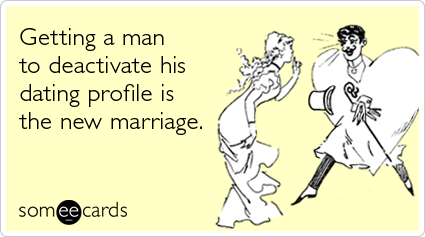
Internet dating has made it easier for single people to meet, but the question remains: is it making it too easy to meet new people? Dating has become a thing of convenience since the Internet made everything so easy. It changed the way we meet people, how many people we meet, and how frequently we meet, but the question remains about what else it has changed.  A lot of other aspects of dating are changing; like compatibility, and commitment are being effected by this new online dating world, but what is hard to tell is if these changes are good or bad?
            As online dating increases, commitment decreases. With more options out there, people chose to explore their options more rather than work on the relationships they are already invested in. as Jacob in the article said
“I’m about 95 percent certain, that if I’d met Rachel offline, and if I’d never done online dating, I would have married her. At that point in my life, I would have overlooked everything else and done whatever it took to make things work. Did online dating change my perception of permanence? No doubt. When I sensed the break up coming, I was ok with it… I was eager to see what else was out there.”
For Jacob, and other online daters out there, the options are too vast. They never have to settle, to commit, because the Internet will always provide the option of a better partner. In this sense, the Internet has made commitment obsolete, however, the question remains of whether there truly is a better mate out there, or why is commitment such a burden?
            Another big change comes in the importance of compatibility. With online dating sites like match.com and zoosk, compatibility has become an algorithm. Your personality likes and dislikes, and desirable traits are all added up and utilized to decide your potential match rather than you going out and doing that yourself. This loss of personal evaluation of others has made the whole “getting to know someone” process seem unnecessary to online daters, and made it so their relationships can go from strangers to soul mates way too quickly. Why get to know each other over dinner when you can do it online? Well in this sense, the whole process of searching is left to more powerful devices. The question that remains is should we leave it to them?
            Around 1/3 of couples met their partner online. This fact can be scary to some, but uplifting to those who have a hard time meeting people in real life. One thing’s for sure, relationships, and the way we view them have changed. People have the ability to meet each other much more efficiently than before, but is dating something that needed to be more efficient in the first place? How will this affect the outcomes of our relationships?

Are we ever really away from home?


The Internet has indeed proved to be the ultimate educational communication media. It has given people the opportunity to explore information about different cultures and countries with the click of a button. However, as Huesca claims, it has also ruined the experience of travel and study abroad for many people.

There is undoubtedly no better way to learn the culture and language of a country than to live in such country for a period of time, just as college students do when they study abroad. Now, Facebook, Twitter and other social media allow students to be connected with their friends and family when they are in a different country. So even though they could be thousands of miles away from home, in a way, they are still home. They are not “disconnected” from their life and culture and are therefore unable to be submerged into a new one.

Yes, it is nice to be able to stay in touch with family and friends from back home from anywhere around the world., but we are clinging too much to familiarity. In order to truly learn and appreciate the culture of a specific country, we need to be in the country completely, not only half the time. I agree with Huesca; new media is ruining the study abroad experience because while students have the familiar entertainment and  accessibility to communication with their friends, they feel no obligation to go out, explore, and find new ways to be entertained. 

Huesca proposes the idea of disconnecting students from technology while they are abroad. This would probably result in students getting more out of their experience abroad and truly learning about the new culture. The culture shock will be bigger than ever, especially in a time when people have become so accustomed to technology and communication media, but it would open the path for a cultural enrichment opportunity like no other. 

Technology and Intimacy

Our life style has evolved significantly as a result of technological progress. As Turkle claims, it has transformed every socio-economic aspect including education, business and medicine (152). In the modern era, technology stands our strongest ally. Our obsessive and abusive usage of the privilege is, however, leading us down a dangerous path.

One social aspect technology has conquered is social interaction. The way we interact with each other has been changing continuously as more sophisticated but easier-to-use devices are being introduced on regular bases. Drawn by the allure of these toys, most of us spend a significant amount of time in our fortress of solitude, where we indulge an illusion of social interaction. We stay in touch with multiple individuals at the same time via media outlets without capturing the real emotion driving the conversation. Although these means of communication allow for greater free space, they pose a risk of undermining the person at the other end to an object (Turkle, 154). Some fear this threat has already been realized. When we tweet or address a group of friends on Facebook, we are treating the individuals as a unit (Turkle, 168). The networking tools are also inspiring frustration. Some voice concerns about privacy as most of these Medias are readily accessible to everyone (Turkle, 256). Nonetheless, most of us choose to continue making use of these medias for we have no other way to turn. People found at a close proximity to us – parents and friends alike – are consumed by the web (Turkle, 267). Therefore, we have no choice but to join the playground and fight for the attention we seek.

The impact of social networking that technology made possible in recent years has mounted to make some of us nostalgic about earlier days when social interactions were mainly conducted face to face. I believe we are well past the turning point. Hereafter, technology continues to progress at a greater pace transforming our way of life to the point where we lose the legacy of social intimacy altogether.                  

Tuesday, February 12, 2013

Sherry Turkle and Virtual Worlds


Location: Prognosticator's Chair

My students are in the midst of Alone Together, Sherry Turkle's jeremiad about the dangers of technology that throughout her book she calls "always on" and "always on you."

Though few Second Life or World of Warcraft users carry these imagined worlds around in their palm, given the beefy nature of the client software, many do spend lots of time in-world. Turkle's subjects mostly find escape there, and she freely admits that one can use these imagined spaces for "embarking on a potentially 'therapeutic' exercise" (212).  Mostly, however, she focuses on gamers like Adam, on the verge of losing his job, or Pete, who cheats on his wife with in SL, having a relationship with an avatar named Jade.  My students had their worst stereotypes of these immersive environments supported by Turkle's book, which otherwise does such a fine job of critiquing the other from of addiction to online activities, the augmented self of texts, apps, and phones glued to the users' palms.

It would be been interesting to see what she'd make of Fran, the 85-year-old Parkinson's patient, who with her daughter created SL avatars. As Wagner James Au reports, Fran was able to visualize herself standing again unaided, while watching her avatar Fran Seranade do Tai Chi or dance. Soon enough, Fran recovered some mobility.

Tom Boellstorff, author of Growing Up in Second Life, has met Fran and her daughter. He and other researchers are studying what has occurred. It's a heart-warming story of the sort rare in Turkle's book.

I will speculate a bit here, something I warn my students against since for them, the art of extrapolation from solid data may be safer for their grades.  I'll let you readers grade me.

Alone Together began as Turkle's "letter" to her daughter Rebecca. In Paris, Rebecca had spent her time texting and on Facebook, instead of taking in the city's many delights. Turkle was disappointed and has crafted one of the best critiques I've encountered of our relationship with our machines and the loss of such things as "the rewards of solitude" (3).

I hope that my class will remember Joel, Turkle's research subject who is an SL builder, both of content and community. Yet I fear Pete or Adam will stay in their minds instead. I do not possess the professional expertise to question how Turkle's bias might have influenced her writing about virtual worlds, but as a reader, I would have liked more Joels, and maybe a Fran, to balance the negative and all-too-common stereotypes of gamers as addicted, soon-to-be-unemployed, social castoffs.

In fact, I'd go so far, an an educator who has used Second Life and OpenSim grids and SimCity 2000 in class settings, to make another claim. Whatever the validity of Turkle's data, her method of presentation about gamers weakens for this reader her critique of social media, texting, and other potentially addictive behaviors.

That may be my bias, given the ease with which users of those apps can get a regular fix.

Work Cited:

Turkle, Sherry. Alone Together: Why We Expect More From Technology and Less From Each Other. New York, Basic: 2011.